Showing posts with label What is Organic. Show all posts

Thursday, July 3, 2008

Organic Testimonial

Peggy FlemingOrganics are available more and more every day, and consumers are seeing the affects of this new niche market. Peggy Fleming, an Olympic figure skating champion, is now testifying for Healthsaver. This article from Fox Business shares her opinion as well as helpful statistics on organic foods.

Figure Skater Peggy Fleming Teams With HealthSaver: Go Organic for Quality, Natural Food

The organic food that reaches your grocery's shelves retains the genuine flavor nature intended and often contains more nutrients than its counterpart. With the popularity of organic food on the rise, consumers now find organic produce, meat and dairy products more accessible than ever.

"The difference between conventional food and organic food can be traced back to the farm," said Peggy Fleming, Olympic figure skating champion and HealthSaver spokesperson.

Organic farmers ensure natural, quality food by growing produce without pesticides and chemicals, and raising livestock without unnecessary genetic or hormonal practices.

"Certified organic farms are also earth-friendly," said Brad Eggleston, vice president of HealthSaver.

Read more about organic foods here.

Monday, June 2, 2008

Missouri Organic Mulch Made from Missouri Waste Paper

Local and organic: what better product can you get? EcoCover is an opportunity to start your own contributions to the organic industry in a different way than most typical organic production (consisting of growing food products). EcoCover is an organic mulch that can be manufactured right here in our very own Missouri.

That's the EcoCover Proposition: Local Business Producing A Local Benefit

EcoCover® is dedicated to provide products globally that sustain and benefit the environment. The EcoCover business is a wonderful example of a commitment to the three pillars of sustainability - environmental, economic and social.

EcoCover mulch mat is primarily produced from waste paper removed directly from the landfill waste stream, having a number of unique product attributes that richly benefit the plant, soil and environment. EcoCover mulch and fertilizer enriched mulch mats are a 'world first' in providing a cost-effective substitute for plastic and other mulch systems used in the horticultural, agricultural and land management industries. EcoCover is unique in the sense that it is the world's most complete plant mulch.

EcoCover Mulch Mat:

Patented, organic, compostable, biodegradable, conserves water, reduces plant mortality, controls weeds, promotes plant growth, moderates soil temperature, reduces soil erosion, eliminates or reduces herbicide use and a carrier of beneficial additives for the soil.


Read more about EcoCover here.

Thursday, May 22, 2008

Candy Expo Highlights Gourmet, Premium and Organic Products

Some would never expect the wide array of organic products available to consumers--including organic candy! Confectionerynews.com featured this article about how organic candies are playing a primary role in the Candy Expo in Chicago, Illinois.

Candy Expo Highlights Gourmet, Premium and Organic Products

The All Candy Expo currently taking place in Chicago is highlighting gourmet, premium and organic products, which organizers say is the fastest growing segment in the confectionery and snack market.

These more upmarket products are given their own space in the newly expanded Gourmet Marketplace, where new premium confectionery and snack products can be seen and sampled and confectioners demonstrate their craft.

Premium innovations and organic and ethically sourced products continue to pour onto the market as consumers see chocolate as a rewarding and luxurious treat and become more concerned about the provenance of their confectionery.
In March this year, Nestlé announced the establishment of a research and development center dedicated entirely to dark and premium chocolate.

In addition, reflective of its continued popularity, organic chocolate brand
Green & Black's (part of Cadburys) has just been awarded three prizes by readers of UK Good Housekeeping in the magazine's Food Awards for best organic product available in a supermarket, favorite Fairtrade product and favourite comfort food.

Read the entire story here.

Wednesday, May 21, 2008

Future of Farming: Local, Organic, Home Delivered

OrganicWhere are we headed in the future? The pattern among consumers points us toward an environmentally concerned America. This story of a California organic operation shows how consumer oriented businesses are sucessful while a the same time maintaining high quality products.

Future of Farming: Local, Organic, Home Delivered

An engineer by training, a capitalist by instinct, young Thaddeus Barsotti might represent the future of farming – at least for the growing segment of the population that wants its food organic, local, fresh in season and grown using sustainable methods that preserve rather than denude the land.

Barsotti, 27, runs
Capay Fruits and Vegetables here in a peaceful valley, about an hour's drive west of Sacramento and 90 minutes from the Bay Area. The farm, established by two University of California, Davis, grad students in the 1970s and now owned by their four sons, is fast becoming a miniconglomerate in the world of natural foods.

"We really are building a relationship between the consumers and the farm," Barsotti told me as we bounced down the road in his dusty Toyota pickup truck one morning last week, talking produce and profits. "We have 3,000 customers who know I am there in the field on this piece of property growing their food. There's a connection there."

Read the entire story
here at sacbee.com.

Friday, May 16, 2008

The Changing Consumer

Organic products may come at a higher price sometimes, but it is obvious in this article that quality is what is important to the consumer. Mambo Sprouts Marketing and other organic advocates now have evidence that consumers honestly believe organic is worth the price paid.

Consumers Are Dedicated to Organic

Consumers are still willing to pay more for organic or green products and services, despite a tough economy, according to a recent market survey released by
Mambo Sprouts Marketing.

The group surveyed 1,000 natural and organic consumers in April. The marketing group looked at current buying habits compared to 6 months ago. The survey showed about nine in 10 consumers reported buying the same or more environmentally products now versus 6 months ago.

Some of the study’s key findings include:
  • Seven in 10 respondents said they have changed their shopping and eating habits due to the economy and higher food and energy prices.
  • About three in 10 are buying more organic and natural foods at their regular supermarkets.
  • About seven in 10 consumers are still willing to spend up to 20% more for “green” sustainable products.
Richard Pirog, associate director for the Leopold Center for Sustainable Agriculture in Ames, Iowa, says he believes the core group of organic consumers has not changed their buying habits. “Food prices are sharply increasing, but they are still a small amount for the average consumer,” he says.

But, he believes those who may just buy organic food occasionally are probably opting against purchasing the higher-priced items. He says he sees these consumers looking more at sales items to continue buying organic products.

The survey asked consumers how they were coping with the current economy’s higher food prices. It showed that most consumers are doing such things as using coupons and watching sales. The results showed consumers saving their money on green products by:
  • Using coupons
  • Stocking up on sales
  • Cooking meals at home
  • Taking fewer or combining shopping trips to save gas
  • Buying story label organics in place of branded organics
  • Buying or planning to buy locally grown or seasonal produce
  • Planning meals based on what’s on sale
According to the survey results, the increased consumer commitment to green and organic products is due to increased media attention and awareness of the health and environmental advantages of buying organic, locally produced and sustainable food.

Wednesday, May 14, 2008

Parents Push for Organic School Lunches

In Iowa, some are seeing the value in organic foods being served to people of all ages and backgrounds. Parents are coming to the forefront in organic lunch promotion in schools so their children can live the healthiest lifestyle possible. The Des Moines Register shows in this article that there are farmers are willing and able to provide the organic foods affordably to schools.

Parents push for organic school lunches

Nearly 300
Iowa City parents have signed a petition to get more organic, locally grown food into their youngsters' school lunches.

Food service coordinators for three Iowa school districts say they are trying to buy more local food, but organic fare is nearly impossible without drastically increasing meal costs.

"There needs to be a reality check," said
Diane Duncan-Goldsmith, director of food services for the Iowa City school district. "Is this something schools can do? Maybe if we want to have $4 or $5 lunches."
Other school districts nationally are offering organic foods, with one district dropping desserts in order to offer the fare.

The
Better Iowa City School Food committee will deliver its petition to the Iowa City school board Tuesday, said Deirdre Egan, an Iowa City mother of four.

The petition asks the board to implement a wellness policy requiring the district's schools to use fresh, locally grown and organic ingredients "to the extent possible."

Parents in the group have a range of goals, including cutting the use of sugar and processed meats, Egan said. However, "if we had to make a list of priorities, organics are probably in our top five."

Read the entire story
here.

Friday, May 9, 2008

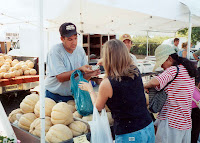
KC Organics and Natural Market

Organic ProducePeter of the KC Organics and Natural Market “The Farmer’s Market in a Park” passed this on to me and I've been meaning to get it posted on the blog. This market has lots going on and some very fun vendors.

From Peter Stauffacher:It's that most wonderful time of year again! Oh, the joys of Spring and all of the new life! It has been a slow and late start to Spring this year, but we are still opening at our usual First Saturday of May. Things are coming together despite the slow start, and it looks like the fruit is surviving some near freezes.


There should be some early greens and things. And we will even have some blueberries and other fruit this Saturday! There will be the regular items that are less weather affected and lots of plants too. The prospects look great this year for increases in the amount and variety of produce. We have some new vendors who will be joining us as the season progresses, and the regular farmers have increased their production substantially!

We will hope to see you this Saturday (even if it rains a bit- and we especially thank the die-hards for coming out on such days!). We also thank you for spreading the word and helping us continue to grow into SKC's special organic market. For new folks we have a map for you with easy directions at our website- http://www.kcorganics.com/. Thank you for your steadfast support, and we hope to see ya soon!

The Market is open Saturdays May 3rd through October 11th from 8:00 am to 12:30 pm, in Minor Park. Go 1 mile South of I-435 on Holmes, then east on Red Bridge Road (111th Street).

You'll find:
Fresh-picked, locally grown organic produce; also honey, edible fl owers, herbs, mushrooms, breads and baked goods, grains, sauces, FT coffee and Eco-products, free-range eggs and some meats. Also soaps, body care products, natural stoneware jewelry.

A Unique Market Experience in all the Best Ways:On the Grass, Under the Trees, in Beautiful Minor Park, with hikeable trails, lots of acreage, and the Little Blue River.

Wednesday, May 7, 2008

The Organic Evolution

The Organic EvolutionOrganic farming has made a big hit in Missouri and the nation. While organic farming used to be a small niche market, it is expanding into a larger and more integral part of the fruit and vegetable industry every day. This article from 24-7 Press Release shows that now 20-30% of all produce in grocery stores is grown organically and how farmers are improving their technology in selling products to improve those percentages even more.

Merchant Accounts for Organic Produce Vendors


Organic produce has worked its way from a nonsensical luxury to a fringe health craze to the mainstay of the fruit and vegetable industry. Once, when farms were being forced to shut down, the farmers chose to grow organic produce to supplement their incomes. In rural areas, farmers offered co-op markets where mostly local residents could pay an annual upfront fee and visit the market once or twice a week to pick up a predetermined amount of organic produce for their families. In many cases this type of business became more than a supplement than a sideline.


Read the entire story here.

Wednesday, April 23, 2008

Taste the difference

Organic Grapes While you may hear quite a bit of talk about organic fruits and vegetables, something that doesn't get too much focus is the growing interest in organic wines. Recently at a wine tasting, consumers got to taste the organic wine and found it to be outstanding. This article from the Kalamazoo Gazette (and mlive.com) helps to clarify the differences in organic and other wines.

Getting to the bottom of organic wine

An organic wine turned out to be the hit of a recent wine tasting at North 11 restaurant sponsored by Salut Fine Wine & Spirits, in Comstock Township.

The California wine, Girasole Vineyard's Pinot Noir 2006, impressed guests with its fresh, primary flavors and easy-to-drink nature.

The popularity of the wine among the small group at the tasting brought to mind a variety of questions people ask about organic wines. Here are some of those questions, along with answers from area wine retailers:

What is organic wine? This matter can be confusing. Some wines are certified organic by the
U.S. Department of Agriculture -- they are made with organic grapes and have no sulfites added. Some wines are labeled organic and are made with organic grapes but have sulfites added.

There are also organic wines that are not labeled organic because a vineyard didn't want to jump through all the hoops and pay the money to gain organic certification.

It is best to establish a relationship with a beverage-store owner or knowledgeable wine clerk who can help steer you to preferred organic wines.

Where can you get organic wine? Organic wines are available at most retailers that have a large selection of wines. The organic ones are often in their own section.

What are
sulfites? Sulfites are a natural preservative people have been using for hundreds of years to keep wine stable. They come from the skin of grapes. Some wine producers add more sulfites to keep wine stable for shipping and storage. Sulfites do not change the flavor of wine.

Are
sulfites OK for the body? Sulfites are dangerous to a small portion of the population that is allergic to them. By the time people are adults, they usually know if they are allergic to sulfites, which are present in other foods such as fruit juice and sausages.

Some people claim
sulfites give them headaches. Many of these people may be reacting to the naturally occurring histamines in red wines or simply drinking too much wine.

Monday, April 14, 2008

Organic Farming Changes Lives

Organic ProduceWhile organic farming and farmers' markets often please the consumers and producers involved, they are not always life changing. Here is a story from The Monitor about how one woman's life was altered completely due to her new experiences in organic farming.

Organic Farmers Market Reaps Huge Rewards

For 18 years, Maria Saldaña of San Juan worked at a plant in McAllen that produced military MREs, or meals ready to eat.

She'd planned to work there until retirement. But then in summer 2006, the company announced it was re-locating to another state.

Suddenly, Maria and her co-workers were unemployed.

"I got so depressed," Maria said. "And at my age, it's not easy finding a job. I stayed home and I worried a lot. I got sick and ended up in the hospital."

Then Maria heard about a program run by Texas AgriLife Extension Service that teaches colonia residents like her to grow organic vegetables in their back yards and sell them at a farmers market.

Read the full story here.

Friday, January 4, 2008

Organic Podcast 4

This week’s podcast MOA Spokesperson Melinda Hemmelgarn will discuss: What is "organic" meat by definition, explain why natural is NOT "Organic", the nutritional benefits of grass-fed/pasture-based organic meats (decreased total and saturated fat; increased levels of antioxidants, beneficial fatty acids and vitamins A and E), environmental and farmer benefits and cookbook information -"The Grass-fed Gourmet Cookbook" and "The Farmer and the Grill," both by farmer and RD, Shannon Hayes.

LISTEN: Organic Podcast #4

Reference Information:

  1. Organic labeling: See consumer information, specifically.
  2. On food terms
  3. Re subtherapeutic antibiotics, anti-biotic resistence and the American Public Health Association

Wednesday, December 12, 2007

Organic Podcast 3

This week’s podcast is an interview with MOA Spokesperson, Melinda Hemmelgarn on the nutritional benefits of organic dairy.

Topics to be covered in this podcast: How is "organic" defined? What does it mean to be an "organic" dairy? The significant differences between pasture-based organic and conventional dairy products. What are the nutritional differences and benefits of organic dairy products? Summary of important nutrients contributed by dairy products. An account of dairy farming as told to one nutritionist.

LISTEN:
Organic Podcast #3

Reference Information:
Benefits of Dairy in general: - Dietary Guidelines for Americans
"Back to Basics: Have Milk with Meals." Journal of the American Dietetic Association, Nov. 2006

Monday, December 10, 2007

Organic farming to be topic of forum

News on Organic Farming ---Cornell Cooperative Extension of Ontario County is hosting a workshop Tuesday to help consumers understand what is meant by the term organic gardening and the many labels that are associated with it.

The terms organic, natural organic, grass-fed and free-range on a product all fit into the definition of “organic” or naturally grown but are classified under different categories. The discussion will be led by Greg Swartz, director of the Northeast Organic Farming Association of New York, who will be joined by two local organic farmers to talk about their farming practices. The session will be from 6:30 to 8:30 p.m. at the Extension Center in Canandaigua.

“There is definitely a misunderstanding with consumers of what the terms mean,” said Russell Welser, resource educator at Cornell Cooperative. "For some individuals, when they hear the term organic, they think that it’s going to be pesticide-free, and that’s not necessarily the case either.”

The forum is free. Organizers are asking that guests register by Monday by calling (585) 394-3977, ext. 427.

Friday, December 7, 2007

Organic Podcast 2

This week’s podcast is an interview with Green Hills Harvest Dairy, Stepping back and moving forward," What's it like to be an organic dairy farmer and making the organic decision.” Items discussed include feeding and milking regimens explained and how they differ from conventional dairies and as energy costs escalate and consumer demand for more synthetic-hormone-free and pesticide-free foods increase, organic dairy and local markets are especially getting stronger.

LISTEN: Organic Podcast #2

Reference Information:
1.) Antibiotic excretion:Antibiotic Uptake by Plants from Soil Fertilized with Animal Manure, K. Kumara,*, S. C. Guptaa, S. K. Baidoob, Y. Chandera and C. J. Rosena Published in J Environ Qual 34:2082-2085 (2005)
2.) Definition of "organic." FAO
3.) The American Dietetic Association's Healthy Land, Healthy People report
4.) What are the nutritional and health benefits of organic, pasture-based agriculture/ dairy. - The Organic Center
5.) Improved breast milk quality from women consuming a diet with organic milk and meat. Benefit traced back to pasture and forages on organic dairy/beef farms.
6.) Many articles on the health benefits of CLA (higher concentrations in pasture-based dairy)
7.) Union of Concerned Scientists: Greener Patures Report

Friday, November 30, 2007

Organic Podcast 1

This is the first podcast segment from the Missouri Organic Association.

The MOA will begin bringing Educational Organic Podcasts each week.

Today’s show will give consumers an explanation of what is the correct definition of organic, the concerns about pesticide residues for children and the facts about the nutritional benefits of organic foods. MOA Spokesperson Melinda Hemmelgarn talks with Brownfield Farm Broadcaster Julie Harker on these topics.

LISTEN: Missouri Organic Podcast #1

Reference Information:
1. The Organic Center
2. July 18th issue of the American Chemical Society’s Journal of Agricultural and Food Chemistry.
3. The American Institute for Cancer Research, Fall 2007 newsletter.
4. United Nations/Food and Agricutlure Organization, Newsroom, May 3, 2007.States should integrate organic agriculture objectives within national priorities
5. University of Michigan: Organic Agriculture and the Global Food Supply:( Farming Can Feed the World), Renewable Agriculture and Food Systems (2007), 22:86-108, Campbridge University Press.
6. American Dietetic Association, Healthy Land, Healthy People
7. IA State: Yields Increase, Soil Resilience Soars; Longer-term research proves organic promise